
I remember a moment 15 years ago when I thought there would be few opportunities to debate controversial topics in my class because the world seemed to be more and more accepting of different perspectives and lifestyles. How these facts have changed.
Now every news cycle brings another injustice that makes the world feel just too heavy. Added to the mix are disinformation, polarization, and populist pressures on curriculum, all of which blend together to make the social studies classroom feel like a minefield. Yet classrooms can be hopeful spaces when teachers deliberately teach students how to listen, question, and disagree using reliable evidence and empathy.
Fostering hope happens when we encourage students to learn how to talk with (instead of to) each other.
Fostering effective conversations
It can be tempting to rely on “shock and awe” to get students’ attention. Graphic images from genocides or disturbing headlines can certainly provoke a reaction. But over time, that approach can leave students overwhelmed or numb rather than empowered. Working with Facing History & Ourselves has helped me shift the focus from extreme emotional impact to understanding perspectives. Instead of asking, “How can I shock them into caring?” the more productive question becomes,
“How can I help them connect to their own choices and responsibilities?”
One simple message has shaped how I think about building this culture of listening in my classroom. My local shoe store has wonderful messages on their walls: “I cannot walk in your shoes – they will not fit me the same; but I can listen to your story to understand” has become a touchstone to me when thinking about classroom dialogue. Students do not need to claim they fully understand each other’s experiences to practice empathy. When my students know that “I hear you, and I still may not agree—but your thinking matters enough for us to explore it,” they begin to feel safer sharing their own perspectives. Over time, this helps replace the fear of being ‘canceled’ with the expectation that disagreement is normal and listening is a form of respect rather than surrender.
Importance of Media Literacy
Many students (and parents) arrive in my class with a familiar stereotype: “All social studies teachers are left wing and will fail you if you don’t agree with them.” This perception cannot be ignored, especially in an era when curriculum and classroom discussions are under public scrutiny. One way to challenge this myth is to invite students explicitly to ‘change my mind’1 —but require them to do it with reliable evidence. When students know that the focus is on the clarity of argument rather than ideological alignment, they start to see social studies as a discipline rather than a contest of ideologies.
Teaching today is different from when I started in the early 2000s. Instead of focusing on memorizing facts-the ‘what’---today’s teaching is more about exploring the ‘why'. Focused media literacy instruction went from being on the periphery to being non-negotiable in my classroom. In practice, this means treating every controversial topic as an opportunity to teach source evaluation through lateral reading. At the beginning of each semester, my students spend three days building media literacy tools using resources from CIVIX (an organization that provides teachers with resources for media literacy, in addition to many other valuable civics activities for your classroom like helping organize Student Vote). When students search for evidence to support their opinions during our crucial conversations, they use these tools to evaluate sources critically. This means there is as much time spent critically thinking about where the information is coming from as there is building evidence to defend an argument (which can now be done in moments).
Encouraging discussion
I used to hold debates and give points for the stronger arguments, encouraging students to compete with each other. Today, I hold Socratic Seminars that build essential skills for living in a civil society. Using resources such as Fostering Civil Discourse can provide you with the tools needed to help students build what Facing History outlines as skills to be in a "Quad of Dialogue"
- Humility – Recognizing that no one knows everything, thus it is important to be open to learning about others' perspectives, experiences and sources of knowledge.
- Curiosity – Asking questions that go beyond “gotcha” moments and seeking to understand how and why others think as they do.
- Empathy – Listening for the human experiences and values behind a viewpoint, even when disagreeing with the conclusion.
- Understanding/Compassion – Working toward a fuller picture of complex issues and considering the impact of our words and decisions on others.
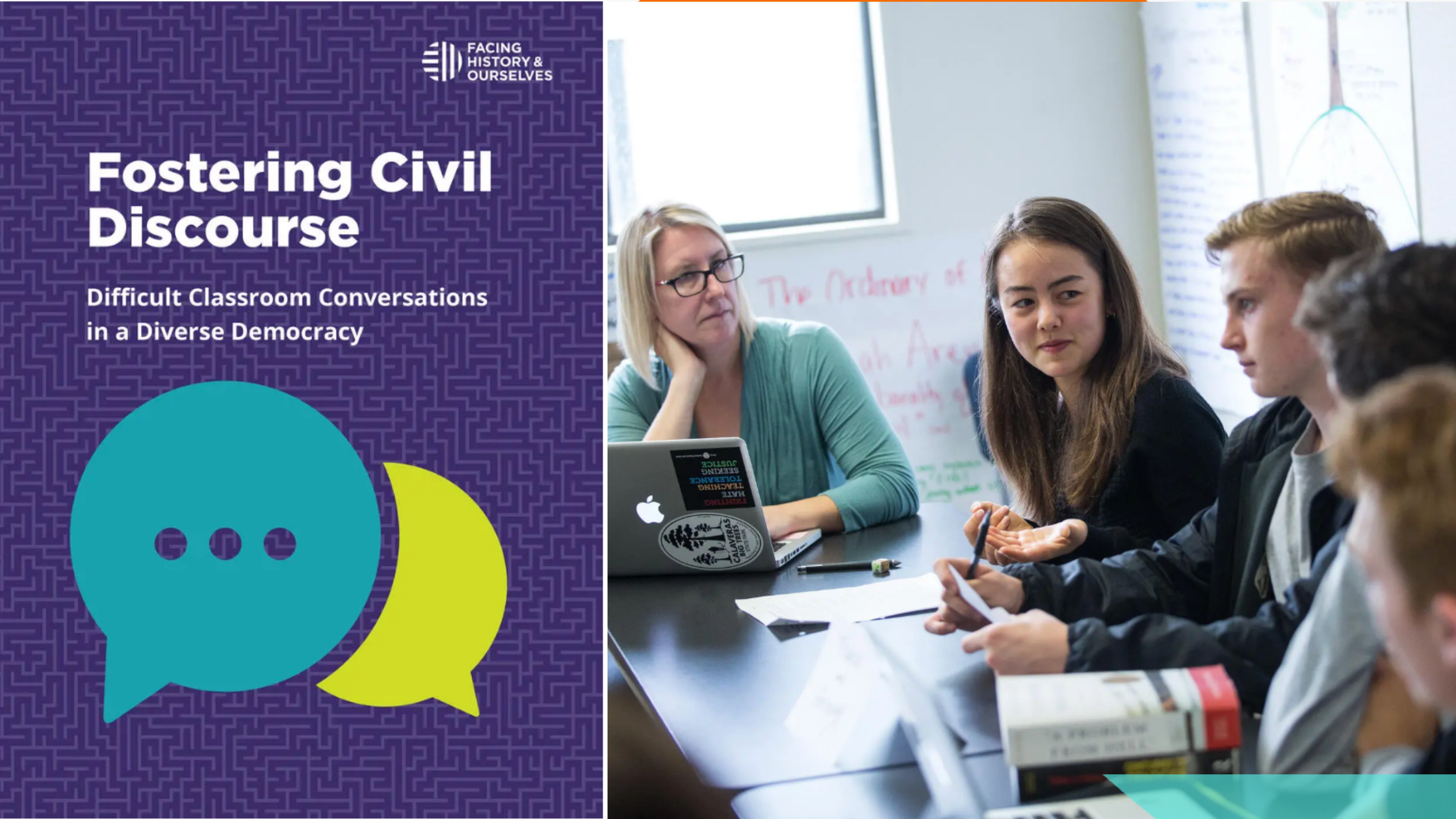
To begin, I provide the class with a list of topics that will require them to reflect on the concepts we are learning, and allow them to decide which topics will be discussed in small groups in the center of the classroom while the remainder of the class takes notes on the discussion. You can find help organizing structured protocols for small groups and turn-taking strategies to ensure that both speakers and listeners are active participants with the Save the Last Word for Me teaching tools.
When I first started holding Socratic Seminars, I expected all students to contribute to the discussion and assessed their participation. However, post-COVID, I've seen significant reluctance to share ideas in front of the whole group - I now honor active listening just as much as speaking, recognizing that there will be opportunities for everyone to express their opinions in other assessments. Participants are often very nervous at first, but by ensuring there is at least one student who is comfortable speaking, we can get a dialogue going that demonstrates to students that these issues are not black and white, and those who disagree are not bad or evil, as many adults seem to be doing on social media today.
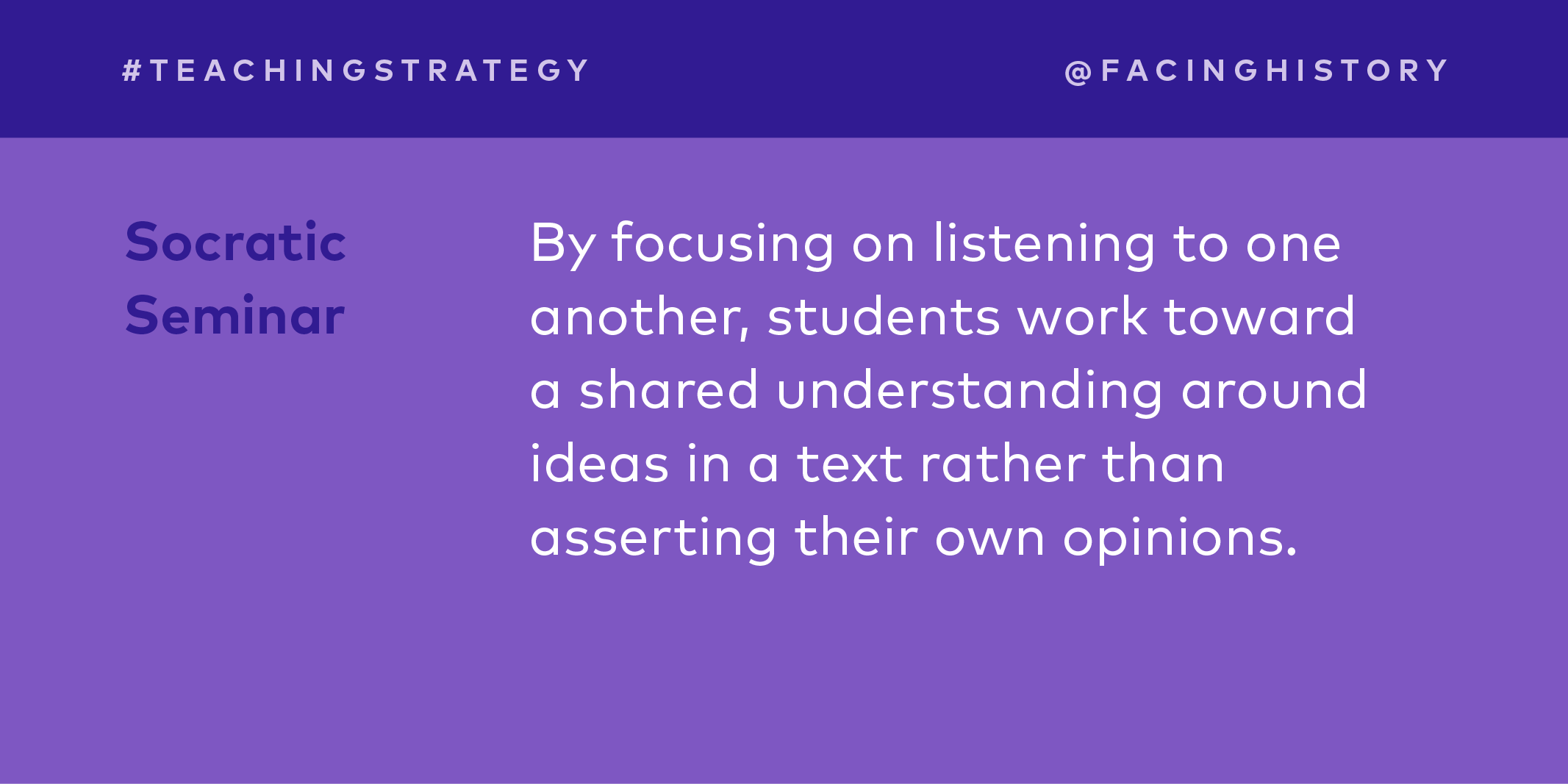
This is why I keep incorporating Socratic discussions into my classroom routines: it can take the weight off teaching social studies by transforming the dynamics. Instead of carrying the full weight of explaining complex issues myself- and risking the accusations of personal bias—students take ownership of inquiry. They become more curious and engaged as they explore multiple perspectives. Research shows that people rarely change their minds when confronted with arguments or facts alone. Genuine understanding can occur when we have open and respectful discussion.
Teaching critical conversations in social studies is not just about covering content; it is about cultivating habits of mind and heart that students will carry into their communities. When a teenager learns to say, “I disagree, but I’m listening,” or “I thought this at first, but the evidence changed my mind,” that is hope in action. In a heavy world, those small moments of practiced dialogue may be some of the most important curriculum we teach and what the world right now urgently needs.
.jpg?width=960&height=540&name=Untitled%20presentation%20(2).jpg)
1. While I try to remain neutral in most class discussions and do not want to advertise what my opinions may be, students understand I do have opinions and it is inevitable that biases can exist