Why Teachers should bring history out of the shoe box and on to “the wall”

Posted by Robert Flosman on February 5, 2013

After the success of our museum, the crowds have gone as have the newspapers. How do you keep the momentum? A class can’t host a museum every month. The answer is turning inward. If we ask our students to uncover their past, to the basements and the shoeboxes in their homes, we uncover the ultimate facing history project: That of uncovering their families’ role in Canadian History. So many 15 year olds know their grandparents for their Florida vacation homes and holiday gifts. Teachers need to push our students to dig deeper. All these stories can be revealed over dinner and a conversation. A simple phone call can reveal a new world for a student and a new appreciation of family and history. What are their stories? Did they serve? Did they engage in resistance activities? What was their war experience? My students asked these very questions, then gathered and documented these stories and artifacts to display on our Wall of Heroes; a dynamic museum being built in our school halls.

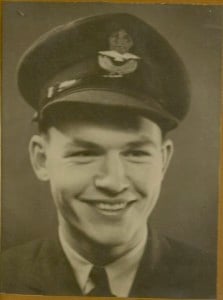
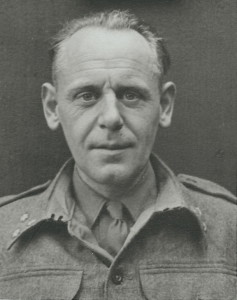
Each artifact on the wall (see example below), provides a picture of the both the grandparents and student (with mention that they attend our school), and a brief account of their grandparents’ exploits. While no artifact will tell the whole story, each opens a window into history and encourages us to stop and further explore the connections we have with each other and our history. Jeff wrote that his grandfather was instrumental in developing CAMP X; that he was not only friendly with James Bond’s Ian Fleming but also guarded Igor Guzenko. Igor Guzenko is the first lesson in any grade 10 Cold war unit...but now that man pictured in every Canadian textbook with the bag over his head; the man who heralded the beginning of the Cold War in Canada has new meaning and connection to the class (Those less impressed with that connection at least went to see Sky fall! ). In the same class, a young lady named Lindsay knew only her Polish Catholic roots. Yet after investigating further, her family turned out to be Jewish! Her family had to hide from the Nazis. Her grandmother will soon be a part of our Wall of Heroes .

Teachers, how many of our students’ grandparents, great grandparents, aunts and uncles have built this country’s history? A life revealed on the Wall of Heroes. Museums don’t have to come from New York. Every student’s family is a small window into the past. At our school, kids are coming from everywhere to tell their families’ tales. A simple plak, costing $11.99 from Staples, brings their history to life for a school and a community. For more information on how to proceed and see our online archive, visit genocide@waterdown and look under Wall of Heroes. Let’s get the museum started!

WaterdownMuseumvandersootblog

W.J.A.M.

was born on Dec. 27, 1902 in Tilburg, The Netherlands. After completing his studies, he was drafted into the Dutch army. When German troops invaded Holland in May 1940, he was a captain and in charge of a heavy machinegun detachment. He experienced some of the bitterest fighting in defence of his country on the Grebbeberg Line. For this he was awarded the Commerative War Cross with bar, (Oorlogs-herinnerings kruis).

Rather than languishing in Germany as a P.O.W., he went into hiding and joined the local resistance movement. Some of the initial sabotage consisted of destroying railroads, falsifying identity and ration cards but as the war progressed his group focused mainly on the rescue and returning of Allied pilots and aircrews. These activities were punishable by death. Both the governments of the U.S. and Britain awarded him certificates of gratitude and appreciation.

He is the great grandfather (Groot Opa) of current students S__________and J______ L___________.

Read More

Topics: Assessment, project, Genocide and Crimes Against Humanities Course, Lesson Ideas

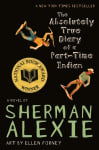
Identity and Othering in "The Absolutely True Diary of a Part-Time Indian"

Posted by Leah Mauer on February 4, 2013

I’m not sure if it’s fate, or the fact that I’m a news junkie, but it seems as though I can always find a connection between what I’m studying in my classes and the news. This past term was no different.

Read More

Topics: Books, Facing History Resources, videos, Lesson Ideas, English Classroom, Literature, English

The Power of a Good Story

Posted by Leah Mauer on February 4, 2013

When I landed my first job as an English teacher at an inner-city high school, I knew I wanted to use the power of stories to allow my students to explore the problems that face our world. Working with students who were at-risk academically, socially, and emotionally, I had my work cut out for me. But I really was not prepared for the preconceptions that my students held, and how difficult it would be to work through them.

Read More

Topics: Books, English Classroom, Literature

The Power of Quotes

Posted by Michael Grover on January 31, 2013

“To be amused at what you read - that is the great spring of quotation.” —Charles Edward Montague

Read More

Topics: Strategies

Right or Responsibility: A Lesson on Sovereignty

Posted by Ben Gross on January 31, 2013

In our studies of 20th century genocides, we explore the rights and roles of leaders in a sovereign state, and the cardinal rule of state sovereignty that has prohibited intervention: the right to independent authority over a territory. But how should sovereignty be exercised? How do we engage students meaningfully in this question?

Read More

Topics: Facing History Resources, History, Strategies, genocide, Totally Unofficial, Raphael Lemkin, sovereignty, Genocide and Crimes Against Humanities Course, CHG

From Transformational Learning to Action

Posted by Ariel Vente on January 30, 2013

August 15-19, 2011 was a transformative week for me as an educator as I had the honour of attending Facing History ‘s “Holocaust and Human Behaviour” Seminar in Toronto.

Read More

Topics: Professional Development

Why teachers should put the “ART of History” in student hands

Posted by Robert Flosman on January 18, 2013

Read More

Topics: Art, History, Genocide and Crimes Against Humanities Course, CHG

Most Borrowed Resources in 2012 from Toronto’s Facing History Library

Posted by J H Slater on January 17, 2013

Have you ever wondered what other educators love about our library? Take a look and see what has been flying off our shelves. If you have a great way of using one of these resources in your classroom, tell us about it!

Read More

Topics: Facing History Resources

Teaching about the Unspeakable

Posted by Jack Lipinsky on January 13, 2013

It's January already and a new year! NHL hockey has returned, and my students remind me endlessly of how they intend to breathlessly watch the revival of rivalries they already have grown to love. Many of them also play hockey for various teams, some for school teams as well. They are busy with all kinds of social events and spend endless hours surfing the Net, on Facebook, enjoying TV shows, and a bit of time doing homework.

Read More

Topics: Middle School, Genocide and Crimes Against Humanities Course

The Myth of the Monolith: Exploring Self and Other

Posted by Ben Gross on January 11, 2013

Exploring identities
Read More

Topics: Facing History Resources, Identity, History, genocide, Genocide and Crimes Against Humanities Course, Lesson Ideas, CHG, Literature

WELCOME

This is where Canadian Facing History and Ourselves teachers and community members meet to share reflections, scholarship and teaching practices that will inspire, challenge and improve teaching and student learning. Our stories provide a window into diverse Facing History classrooms in Canada, and invite you into the discussion.

Subscribe to Email Updates

Recent Posts

Posts by Topic

see all