Why is studying history relevant?
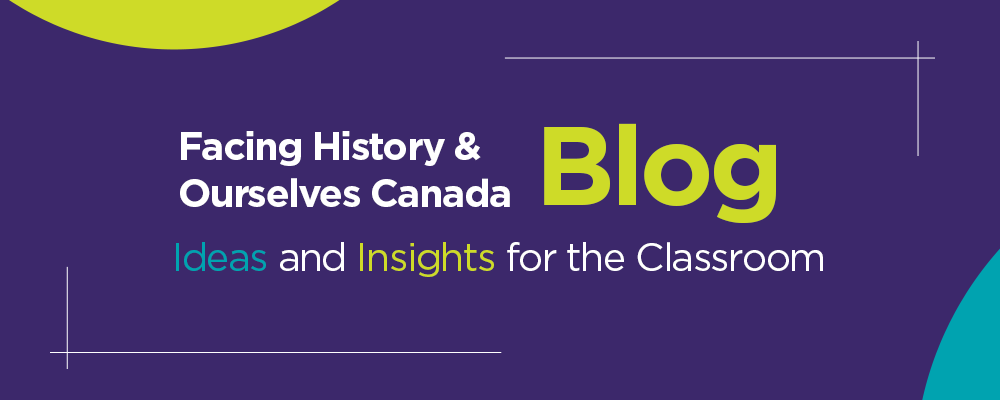
Canada Day, Independence Day, Bastille Day. Theses are days of celebration. People gather, wave flags, watch fireworks, and enjoy a long weekend in celebration. But what exactly are these days in celebration of? Why do we mark particular days with significance? Are these days equally as important for all people? Why do we honour the people we do? Are these people significant for all groups and generations? Can we change the way we remember individuals or honour new ones in light of new information?
Read More
Topics:
Student Voices,
Holocaust Education,
Memorial,
Student Work,
legacy,
Grade 10 History,
CHC,
Black History,
Decolonizing Schools,
culminating
A call out to all Facing History and Ourselves Educators. We are looking for Facing History and Ourselves educators who would be interested in blogging for us. You do not need any blogging experience. You will be working with myself, Facing Canada blog curator Alysha Groff, each step of the way to develop your blog post. You can propose an idea to write about, or simply let me know your interest, and I will work with you to come up with a blog idea that will best demonstrate your experiences as a Facing History educator. Teachers of any grade and subject area that work to include topics of social justice and equity in their teaching through a Facing History lens can write a blog!
Read More
Topics:
Facing History and Ourselves,
Teachers,
Blogs
As Facing History educators, we know the importance of creating a classroom that is a safe space for students physically, mentally and emotionally. This is of special importance because we engage students in conversations about identity, belonging, difficult histories and contemporary injustices - subject matter that can be uncomfortable and emotional. However, we often forget that we also need to take care of ourselves.
Read More
Topics:
Inside a Genocide Classroom,
Mental Health Awareness
Join us on Monday, October 15, 3:30 - 4:15pm EST for a conversation with Facing History and Ourselves Program Associate Jasmine Wong about creating engaging curriculum based History, Anthropology/Sociology/Psychology, and Genocide Studies projects.
Read More
Topics:
project,
Middle School,
Social Studies,
culminating
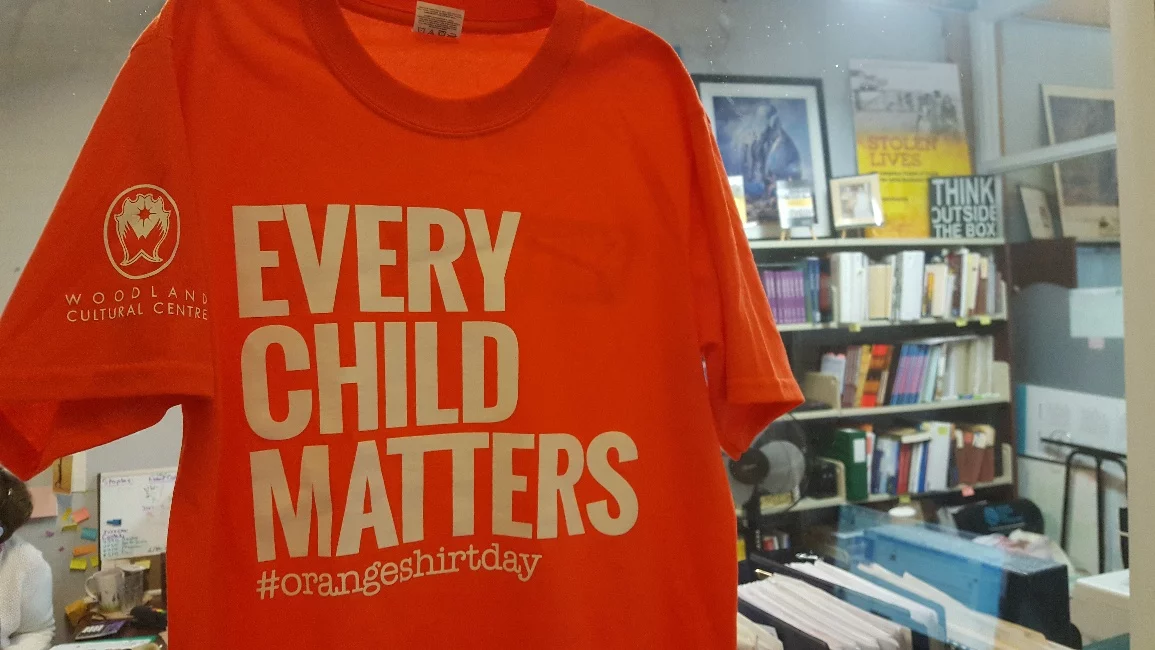
Join us as we have a conversation with Lorrie Gallant, the Education Program Coordinator for the Woodland Cultural Centre (formerly the Mohawk Institute Residential School) about how survivors experience Orange Shirt Day, and what true engagement on this day can look like from education and beyond.
This
interactive online video conversation is intended for Facing History and Ourselves educators to listen, to learn, and to share ideas and questions.
Date: Monday, Sep 24th.
Time: 3:30 - 4:15 PM EST
To join from your computer, tablet or phone, go to
https://facinghistory.zoom.us/j/668270809 (you will need to download a Zoom app or program so give yourself 2 minutes to do so)
Or Dial in by phone: +1 647 558 0588
Meeting ID: 668 270 809
No RSVP is required.
We hope you can all join us!
Read More
Topics:
Culturally Responsive and Relevant Pedagogy,
Community Event,
Grade 10 History,
CHC,
trc,
stolen lives,
settler educators,
Equity in Education,
Decolonizing Schools,
Orange Shirt Day
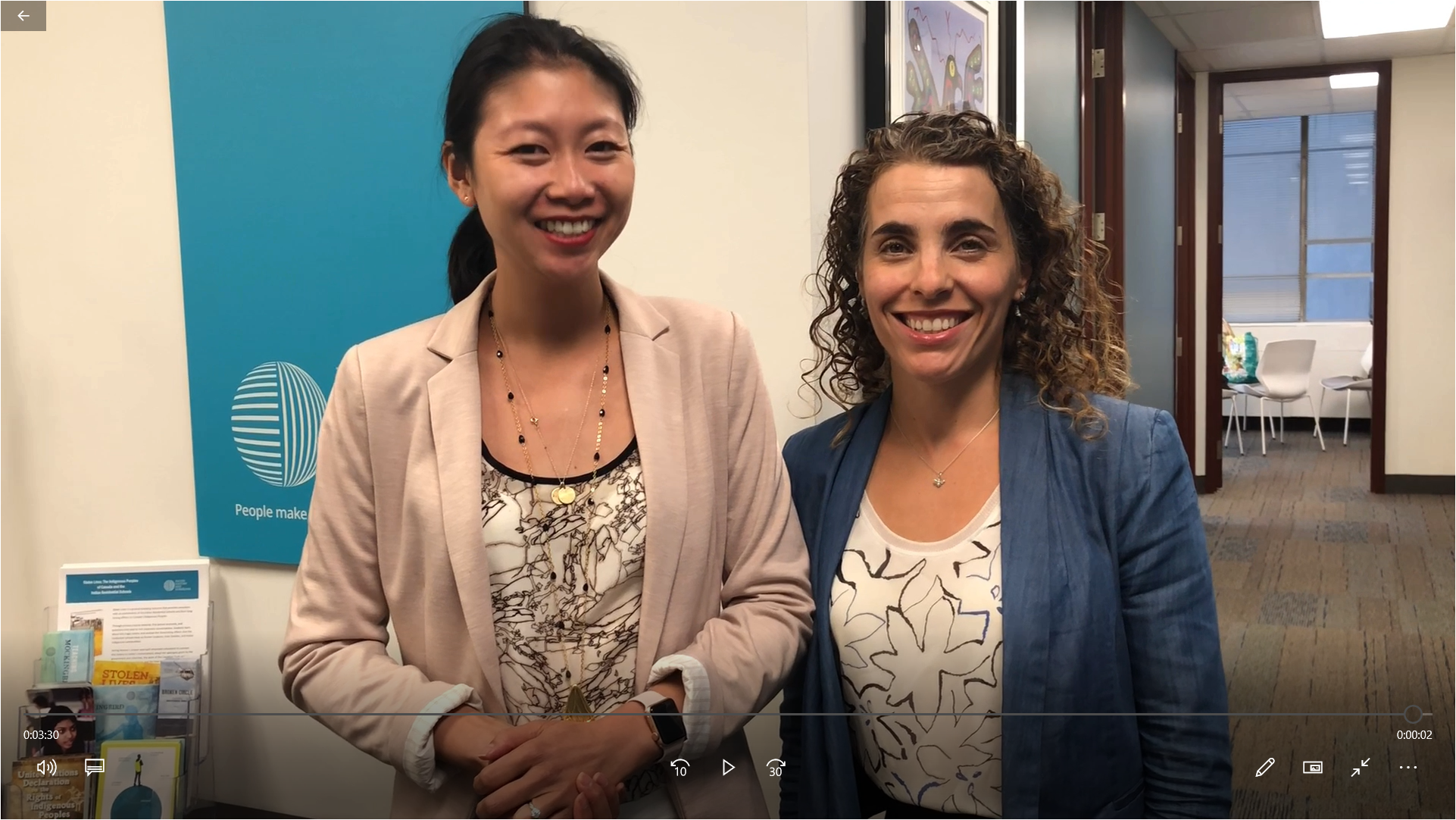
Leora Schaefer, Executive Director for Facing History and Ourselves Canada and Jasmine Wong, Senior Program Associate at Facing History and Ourselves Canada, introduce the new office space and share some thoughts and upcoming opportunities for Canadian educators for the start of the school year.
Read More
Topics:
Back-To-School
When I first found out I was teaching Families in Canada, a grade 12 Family Studies course, I immediately began to consider how I could embed Indigenous perspectives within my course. So often, as history teachers we tend to focus on significant events where Indigenous Peoples experience discrimination. What Facing History and Ourselves' pedagogy reminds me is to acknowledge the resiliency, distinctiveness and contemporary life of the many Indigenous peoples in Canada, their cultures and civilizations in my teaching. This seemed like a perfect opportunity to do both.
Read More
Topics:
Equity in Education,
Decolonizing Schools,
Family Studies
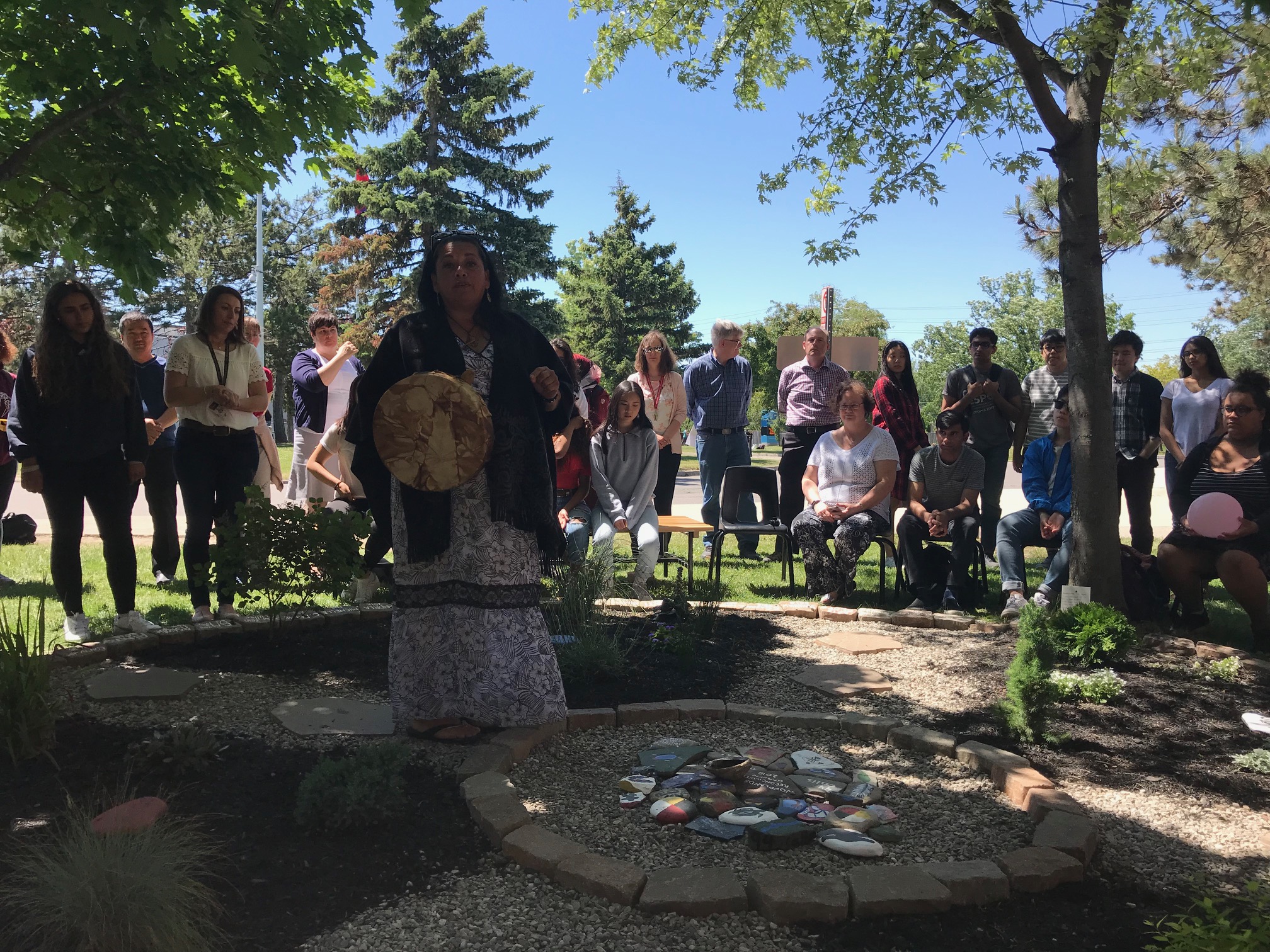
In spring of 2017, five high schools from across the GTA participated in “Decolonizing Schools Together,” a project started by Facing History and Ourselves’ Canadian office in consultation with Traditional Ojibway Grandmother, Kim Wheatley, Shkoden Neegan Waawaaskonen,of Shawanaga First Nation. Recently, we spoke to Kim and to the teachers who supported students through the Decolonizing Schools Together Project to share their reflections and progress.
Read More
Topics:
Grade 10 History,
HSB,
CHC,
trc,
stolen lives,
settler educators,
Equity in Education,
Decolonizing Schools
How do I promote equity and inspire social justice as an educator when I’m not in a social studies or humanities classroom - or in a classroom at all? This was the question that both shifted and drove new passion into my work this past year as an Instructional Coach. Stepping out of the classroom this year was a transition. I was really missing the opportunity to inspire equity and social justice as I had in my classroom. As teachers requested my support, most often with math, I found myself starving for activism and ways to get involved in equity and inclusion beyond academic instruction. Then I went to a meeting that shifted my thinking, and gave me new insight into how I could continue to pursue equity and social justice no matter what the subject.
Read More
Topics:
Truth and Reconciliation,
Inquiry,
stolen lives,
Sacred Circle Teachings,
Indigenous teachings in math,
Social Studies,
Equity in Education
This fall, after a suggestion from Jasmine Wong from Facing History and Ourselves, I decided to explore The Truth About Stories: A Native Narrative, by Thomas King with my grade 11 English students. I was familiar with the text but it would be the first time I would be using it in my classroom. When I was in school we were rarely encouraged to be critical thinkers and we certainly were not encouraged to seek out the stories that make up our land. My goal was to learn with my students and explore and make connections. I was going to use the idea of the Oral Story as my jumping off point.
Read More
Topics:
English Language Arts,
Residential Schools,
Truth and Reconciliation,
English Classroom,
stolen lives,
settler educators